When Israel contemplates changing the status of parts of the West Bank—some call it annexation, while others speak of extending Israeli law or sovereignty over parts of the territory—it provides an opportunity to pause, deepen our understanding of the many perspectives on the issue, and to reflect on the big questions that emerge for each of us and our connections to Israel.
WHAT IS HOME?
Often the discussion about territory and borders focuses on politics and strategy, as it should. It’s important, however, to keep in mind the two words that come together to create a key term: homeland. What is it about this land that conjures such powerful images and feelings of home for so many people? Hebrew and Arabic share similar words for “home”—bayit in Hebrew, bait in Arabic—and both carry connotations of a physical place as well as a sense of being and belonging.
What is home to me might also be home to someone else, and that is where the tension lies: what happens when our perspectives and understandings of home—both physical and emotional—are being challenged?
The Hebrew word acher (other) holds within it the word ach (brother), signaling an intertwined connection between the familiar and the unfamiliar, the I and the thou. Embedded in shared letters (א-ח), ach and acher also come from different roots (א.ח.ר and א.ח.י), highlighting the individual expression of voices and the inherent tensions between brother and other.
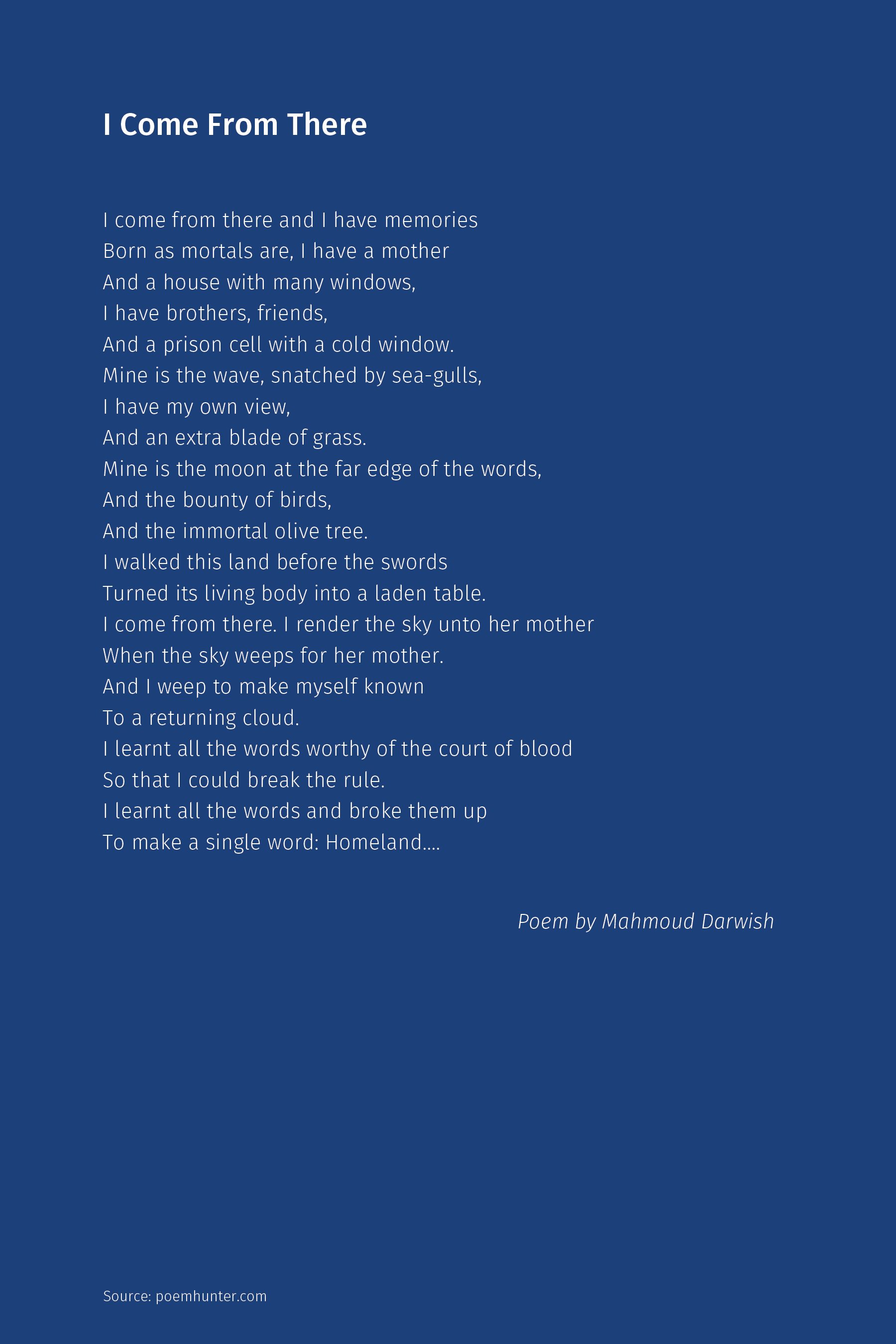
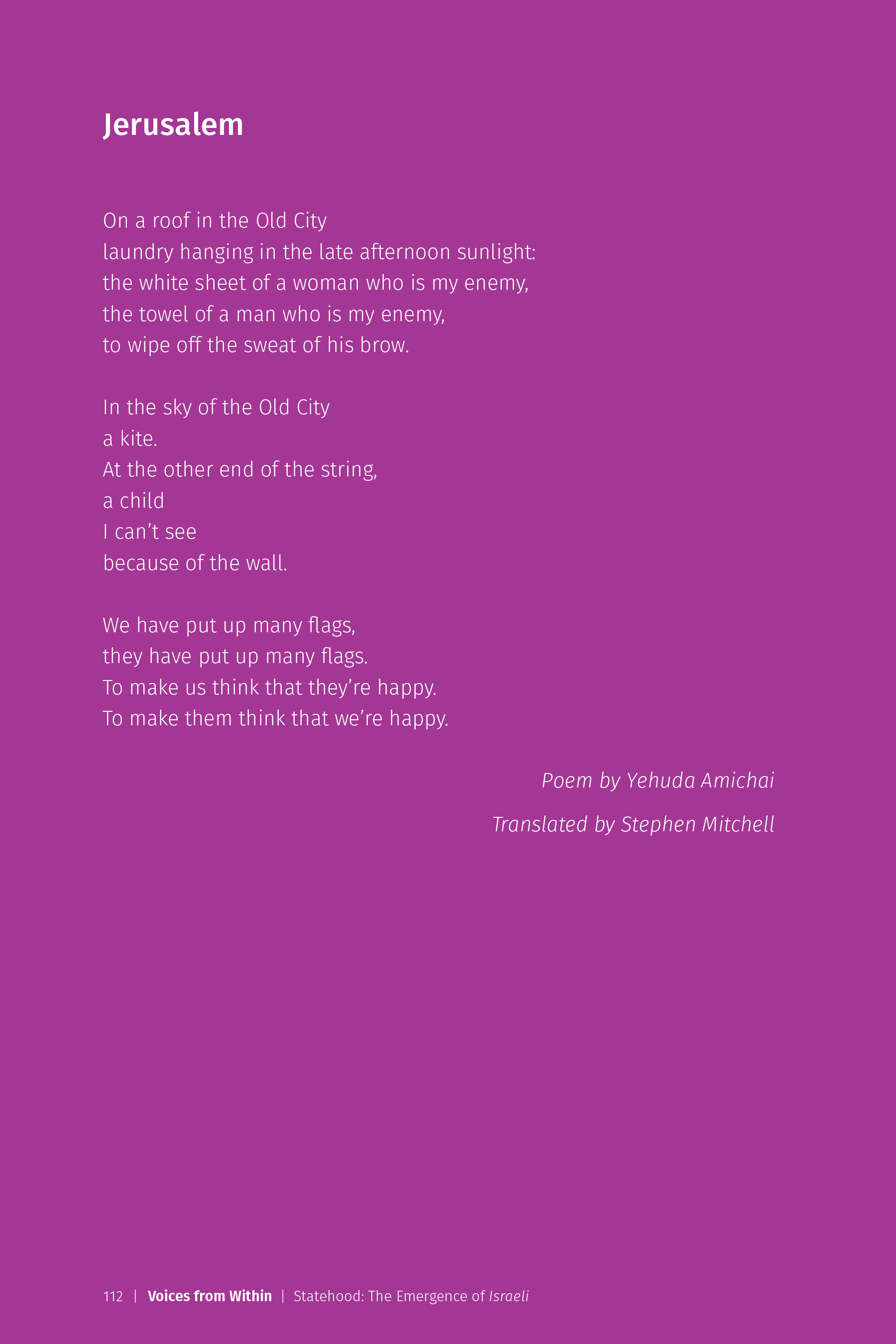
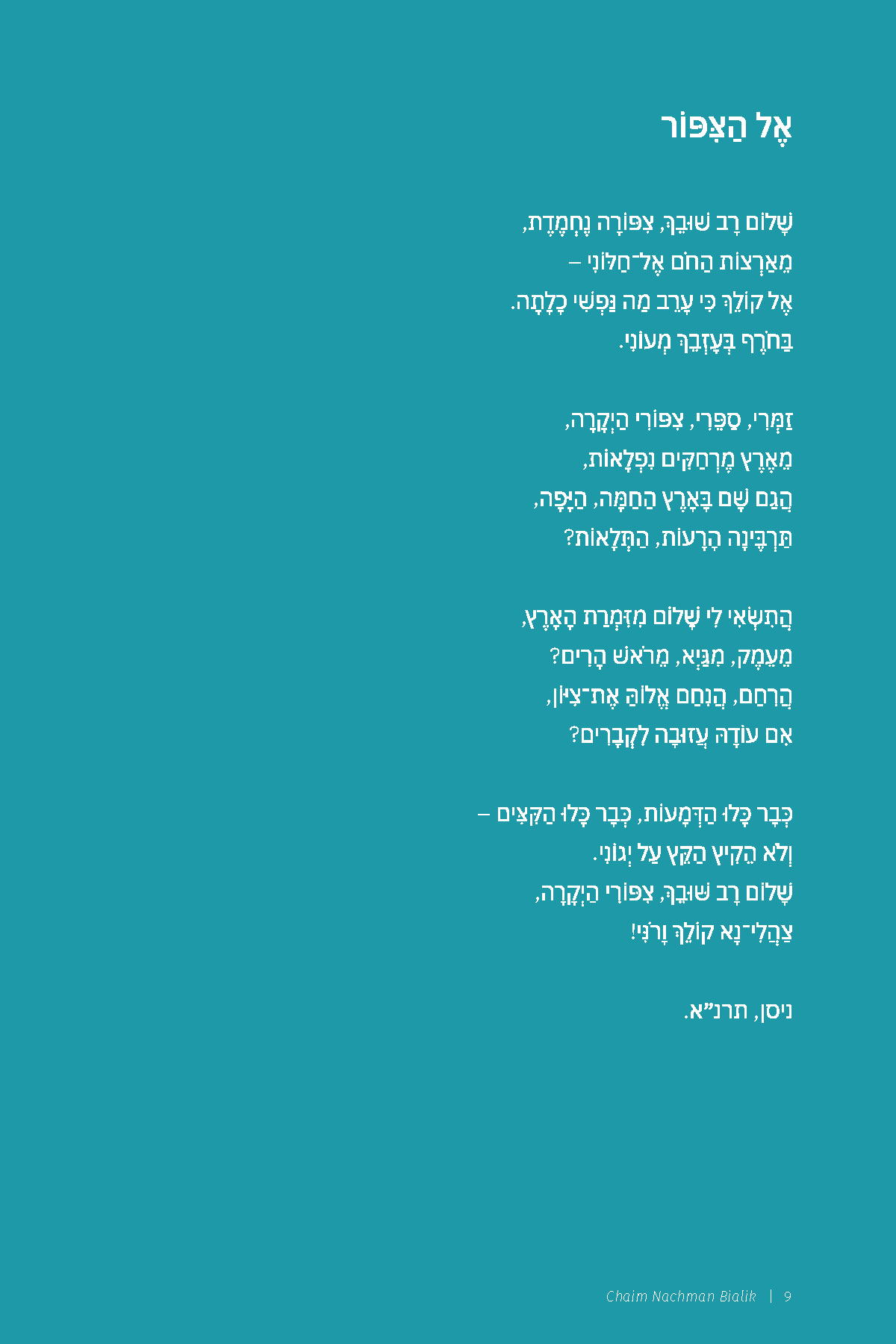
Below are some poems and texts that invite us to explore all the possible feelings, big questions, and tensions we may be experiencing.
This collection of background articles and opinion writing examines the issue from multiple perspectives. We hope you’ll pursue more than one, and consider these questions:
How do we approach sensitive issues? How do we listen to others’ views?
How do different parties to the issue feel about the territory in question? How do you feel about it?
This issue is one piece of the larger story of two peoples’ claims to one land. What options can you imagine for reconciling the conflicting claims?
This site uses cookies to provide you with a better experience and help us understand how our site is being used. By continuing to use this website, you consent to the use of cookies.ACCEPT
Privacy & Cookies Policy
Privacy Overview
This website uses cookies to improve your experience while you navigate through the website. Out of these cookies, the cookies that are categorized as necessary are stored on your browser as they are essential for the working of basic functionalities of the website. We also use third-party cookies that help us analyze and understand how you use this website. These cookies will be stored in your browser only with your consent. You also have the option to opt-out of these cookies. But opting out of some of these cookies may have an effect on your browsing experience.
Necessary cookies are absolutely essential for the website to function properly. This category only includes cookies that ensures basic functionalities and security features of the website. These cookies do not store any personal information.
Any cookies that may not be particularly necessary for the website to function and is used specifically to collect user personal data via analytics, ads, other embedded contents are termed as non-necessary cookies. It is mandatory to procure user consent prior to running these cookies on your website..